The Humorous: Why This Playful Display Font Is a Smart Choice for Your Next Project
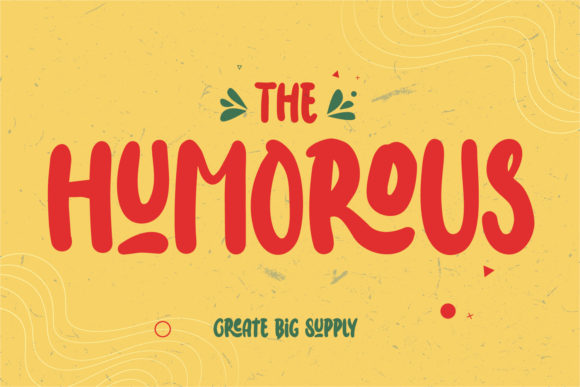
Choosing the right typeface is rarely just about aesthetics; it is about communication. When you select a font, you are setting the tone for your entire message before the reader even processes the words. For designers, marketers, and content creators looking to inject energy and personality into their work, The Humorous stands out as a compelling option. It is not merely a decorative element; it is a strategic tool that can elevate a design from static to engaging.
This cool and playful display font adds an incredibly joyful touch to any layout. However, its effectiveness depends entirely on how you apply it. Many users rush into downloading unique fonts without considering technical specifications or contextual appropriateness. By understanding the specific characteristics of The Humorous, particularly its PUA encoding and distinct visual style, you can avoid common pitfalls and ensure your designs land with impact rather than confusion.
Understanding the Visual Appeal and Intent
The primary reason people gravitate toward The Humorous is its ability to convey emotion instantly. Unlike neutral sans-serifs or traditional serifs, this font carries inherent weight in terms of mood. It feels approachable, lighthearted, and creative. This makes it ideal for projects where you want to lower barriers and invite interaction.
If you are a small business owner launching a fun brand identity, a blogger writing about lifestyle topics, or an educator creating materials for younger audiences, the playful nature of this typeface aligns perfectly with those goals. It signals that your content is not stiff or overly formal. Instead, it suggests creativity and a human touch. However, it is crucial to remember that "playful" does not mean "unprofessional." Used correctly, it enhances professionalism by showing confidence and stylistic awareness.
When to Use (and When to Avoid) The Humorous
A common mistake is applying a display font like The Humorous to body text or long-form articles. While it may look charming in short bursts, using it for paragraphs will fatigue the reader’s eye and reduce readability. The irregular shapes and playful curves that make it attractive also make it difficult to scan quickly.
Instead, reserve The Humorous for:
- Headlines and Titles: To grab attention immediately.
- Logos and Branding Elements: Where distinctiveness is key.
- Social Media Graphics: Where space is limited and visual punch is required.
- Call-to-Action Buttons: To encourage clicks with a friendly vibe.
Conversely, avoid using it for legal disclaimers, technical manuals, or dense informational text. In these contexts, clarity trumps character. Mixing The Humorous with highly legible body fonts can create a sophisticated hierarchy, but only if you balance the weights carefully.
The Technical Advantage: PUA Encoding Explained
One of the most significant features of The Humorous is that it is PUA encoded. If you are new to typography, this term might sound technical, but it has a direct impact on your workflow and the final quality of your design. PUA stands for Private Use Area. Essentially, this means the glyphs and swashes are mapped to unused Unicode characters rather than standard keyboard letters.
Why does this matter? Standard fonts often limit you to the basic alphabet. You get A through Z, numbers, and perhaps some punctuation. With PUA encoding, you gain access to a vast library of alternate characters, decorative swashes, and special symbols that are not tied to specific keys. This gives you immense flexibility.
You can access all of the glyphs and swashes with ease once you know how to trigger them. This allows you to customize headings without needing multiple font files or complex graphic design software. You can swap out a standard 'A' for a stylized version or add ornamental flourishes to the end of a word, all within the same text box. This efficiency saves time and ensures consistency across your project.
Common Pitfalls with PUA Fonts
Despite the benefits, PUA encoding introduces specific challenges that can ruin a project if ignored.
- Copy-Paste Issues: Because the characters are not standard, copying text from one program to another (like from Adobe Illustrator to Microsoft Word) often results in gibberish or missing characters. Always keep your source file safe and avoid relying on plain text editors for final edits.
- Searchability: Search engines cannot index PUA characters effectively. Do not use The Humorous for SEO-critical keywords that need to be found via search. Use it for visual branding, not for the actual text string you want Google to rank.
- Accessibility: Screen readers may struggle with PUA encoded text. Ensure that any important information conveyed through swashes or special glyphs is also present in standard text format for accessibility compliance.
Evaluating Quality Before You Download
Not all free or paid fonts are created equal. Before committing to The Humorous for a commercial project, take a moment to evaluate the font's construction. Look closely at the kerning—the spacing between individual letter pairs. A well-designed display font should have tight, intentional spacing that feels balanced. If the letters feel too far apart or overlap awkwardly, it may indicate a lack of professional polish.
Check the weight distribution. Does the font feel heavy in some areas and light in others inconsistently? A cohesive design relies on uniformity in stroke width and visual weight. Additionally, verify the licensing terms. Some fonts labeled as "free" are restricted to personal use only. Using them for client work or commercial products can lead to costly legal issues. Always read the license agreement to understand if you can use The Humorous for merchandise, websites, or print ads.
Best Practices for Implementation
To get the most out of The Humorous, pair it wisely. Since it is a display font, it needs a supportive partner. Pair it with a clean, simple sans-serif or serif for supporting text. This contrast creates a visual hierarchy that guides the reader’s eye. For example, use The Humorous for the main headline and a neutral font like Helvetica or Garamond for the subheadings and body copy.
Consider color and context. The playful nature of the font works best with vibrant colors or soft pastels. Dark, muted tones might clash with the font’s energetic spirit unless used for a specific retro aesthetic. Test your combination in black and white first to ensure the structure holds up without color assistance.
Finally, do not overuse swashes. While the PUA encoding offers many options, less is often more. A single well-placed swash can draw the eye; ten swashes in one sentence will create chaos. Use these extras sparingly to highlight key words or add a final flourish to a logo. By respecting the limits of the design, you allow The Humorous to shine without overwhelming the viewer.
In summary, The Humorous is a powerful asset for anyone looking to add joy and personality to their visual communications. By understanding its playful intent, leveraging the technical benefits of PUA encoding, and avoiding common usage mistakes, you can create designs that are not only beautiful but also effective and professional. Take the time to test, pair, and plan, and this font will serve you well in your creative endeavors.