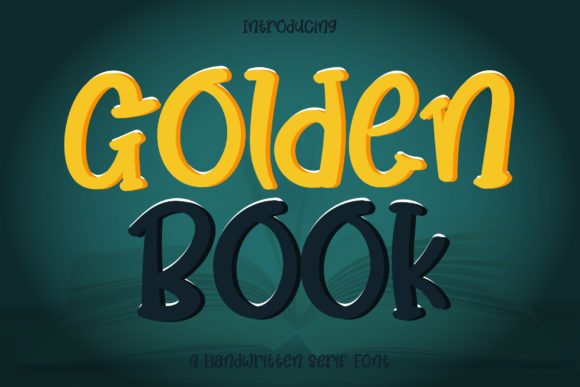
Redefining Visual Hierarchy: Why the Golden Book Font is the Secret Weapon for Modern Creators
In the rapidly evolving landscape of digital design and brand identity, typography has ceased to be merely a vehicle for text. It has become a primary emotional trigger, a silent narrator of brand voice, and a critical differentiator in a saturated marketplace. Among the myriad of typefaces available to professionals, freelancers, and entrepreneurs, few commands attention quite like Golden Book. This is not just another display font; it is a statement piece that bridges the gap between vintage elegance and contemporary cool.
For designers seeking to inject personality into their projects without sacrificing readability or sophistication, Golden Book offers a unique solution. By adding it confidently to your favorite creations, you allow yourself to be amazed by the outcome generated. The following analysis explores why this specific typeface is gaining traction among industry leaders and how it aligns with broader shifts in consumer expectations and creative workflows.
The Anatomy of Attention: What Makes Golden Book Distinct?
To understand the value of Golden Book, one must first look at its aesthetic architecture. Unlike utilitarian sans-serifs that prioritize invisibility, or rigid serifs that lean heavily into tradition, Golden Book occupies a niche that is both quirky and chic. Its letterforms possess a distinct character—often featuring subtle flourishes, varying stroke weights, or playful geometric quirks—that immediately signals creativity.
This font is designed for impact. It is a display font, meaning its primary function is to be read at large sizes where individual character details can be appreciated. Whether used for headline copy on a landing page, the title of a digital magazine, or the logo of a boutique lifestyle brand, Golden Book demands focus. It does not whisper; it curates an experience.
The "Golden" in its name suggests warmth, value, and prestige, while the "Book" aspect hints at literary heritage and storytelling. This duality allows it to function effectively across diverse sectors. A tech startup might use it to appear approachable yet innovative, while a luxury fashion label might employ it to evoke a sense of timeless allure. The versatility lies in its ability to adapt its tone based on context, color, and pairing.
Aligning with the Trend of Expressive Branding
The design industry is currently witnessing a significant shift away from the minimalist, homogenized aesthetic that dominated the 2010s. Brands are no longer afraid to show personality. Consumers, particularly Millennials and Gen Z, crave authenticity and uniqueness. They are drawn to brands that feel human, curated, and distinctive. In this context, generic fonts have become liabilities.
Golden Book fits squarely into this movement toward expressive branding. It allows businesses to communicate their values visually before a single word of body copy is read. For instance:
- Lifestyle and Hospitality: Hotels, cafes, and wellness centers use fonts like Golden Book to create an atmosphere of relaxed luxury. The chic nature of the typeface suggests high quality and attention to detail.
- Entertainment and Media: Event posters, podcast cover art, and streaming service interfaces benefit from the quirky energy of the font. It stands out in crowded app stores and social media feeds.
- E-commerce and Retail: Online retailers looking to differentiate themselves from Amazon-like utility often turn to display fonts to create a bespoke shopping experience. Golden Book adds a layer of editorial flair to product descriptions and sale banners.
This trend reflects a broader change in consumer behavior. People are spending more time engaging with content digitally, but they are also developing higher standards for visual quality. A poorly chosen font can signal amateurism, whereas a confident choice like Golden Book signals competence and taste.
Practical Applications for Professionals and Freelancers
For freelancers and agency owners, the ability to deliver high-impact visuals quickly is paramount. Golden Book serves as a powerful tool in the creative toolkit because it reduces the need for excessive graphic embellishment. Often, a strong typographic treatment can carry the entire design weight of a poster or web banner.
Web Design and User Interface
In web design, hierarchy is key. Using Golden Book for H1 headers creates an immediate visual anchor. However, care must be taken with legibility. While the font is striking, it should be paired with clean, neutral sans-serif fonts for body text. This contrast ensures that the site remains accessible and easy to navigate while maintaining its stylistic integrity.
Consider a portfolio website for a photographer. A standard serif might feel too academic, while a bold sans-serif might feel too corporate. Golden Book strikes the perfect balance, suggesting that the photographer has an eye for the unconventional and the beautiful.
Social Media and Digital Marketing
Social media platforms are visual battlegrounds. In the scroll-heavy environment of Instagram, TikTok, and LinkedIn, static images and carousels must stop the thumb. Text overlays using Golden Book can transform a mundane quote or announcement into a shareable asset. The quirky elements of the font add a layer of intrigue, encouraging users to pause and engage.
Marketers can leverage this by creating consistent brand templates. By establishing Golden Book as part of their visual identity system, companies can build recognition. When users see that specific style of lettering, they instantly associate it with the brand’s voice—be it witty, sophisticated, or avant-garde.
Workflow Integration and Technical Considerations
From a technical standpoint, modern web fonts have evolved significantly. Golden Book is likely available in formats optimized for web performance, such as WOFF2, ensuring fast load times without compromising quality. For professionals working in Adobe Creative Cloud, Figma, or Sketch, integrating such a font is seamless.
However, successful implementation requires strategic planning. Here are practical tips for incorporating Golden Book into your workflow:
- Limit Usage: As a display font, it should be used sparingly. Overuse can lead to visual fatigue and reduce readability. Reserve it for headlines, titles, and short phrases.
- Pair Wisely: Choose complementary typefaces. A simple, geometric sans-serif or a classic humanist serif can provide the necessary grounding for the more expressive Golden Book.
- Consider Context: Ensure the font aligns with your brand message. If your brand is serious and data-driven, Golden Book might be too whimsical. If your brand is about creativity, culture, or luxury, it is an ideal match.
- Test Responsiveness: Display fonts can behave differently at various screen sizes. Always test how the kerning and spacing hold up on mobile devices, where space is limited.
The Future of Typography in Digital Spaces
Looking ahead, the role of typography will only grow in importance as augmented reality (AR) and virtual reality (VR) spaces expand. In these immersive environments, text is not just overlaid on a page; it exists within the physical-digital hybrid space. Fonts need to be robust, scalable, and emotionally resonant.
Golden Book’s versatile nature positions it well for future applications. Its chic aesthetic translates well to 3D rendering, and its quirky details can add depth to AR experiences. As technology becomes more integrated into daily life, the demand for fonts that can convey complex emotions quickly will rise.
Furthermore, the push for accessibility in design means that even decorative fonts must adhere to certain standards of clarity. While Golden Book is artistic, its structure appears to maintain sufficient contrast and form distinction to remain legible for a broad audience. This balance between art and utility is the hallmark of enduring design tools.
Conclusion: Making the Bold Choice
In a world where attention is the scarcest resource, standing out is not optional—it is essential. For professionals, creators, and entrepreneurs, every design decision contributes to the narrative of their brand. Choosing a typeface is one of the most fundamental of these decisions.
Golden Book represents a move away from the safe and toward the significant. It invites designers to embrace their creativity, to play with form, and to connect with audiences on a deeper, more visceral level. It is cool enough for the modern streetwear enthusiast, quirky enough for the indie publisher, and chic enough for the luxury retailer.
By integrating Golden Book into your next project, you are not just selecting a font; you are selecting a mood, a tone, and a direction. You are signaling that your work is crafted with intention and care. So, go ahead and add it confidently to your favorite creations. Let yourself be amazed by the outcome generated, and watch as your designs transform from mere information carriers into compelling visual stories.
The era of bland typography is over. The age of expressive, meaningful, and beautifully quirky design is here. Embrace it.