Calok: A Strategic Approach to Brushed Display Typography
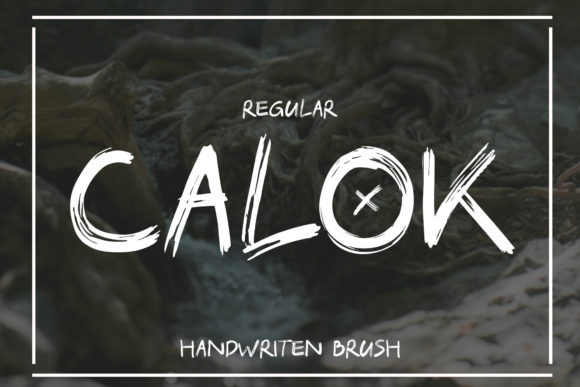
In the landscape of visual communication, typography is rarely just about readability; it is a primary vehicle for brand identity and emotional resonance. When selecting a typeface for high-impact applications such as apparel, sportswear branding, or large-scale advertisements, the choice must balance aesthetic appeal with functional clarity. Calok emerges as a distinct solution in this category. Defined by its cool, brushed display characteristics, Calok offers more than just a stylistic flourish—it provides a structural foundation for designs that require immediate attention and a sense of rugged sophistication.
For entrepreneurs, designers, and marketers, the decision to adopt a specific font is a strategic one. It influences how a product is perceived before a single word is read. This analysis explores the practical applications of Calok, examining how its unique texture and form can be leveraged to enhance branding efforts, improve customer engagement, and support long-term design consistency.
The Strategic Value of Brushed Textures in Design
To understand why Calok is effective, one must first understand the psychology of "brushed" typography. Unlike clean, geometric sans-serifs that convey precision and minimalism, or serif fonts that suggest tradition and authority, brushed fonts evoke movement, hand-crafted effort, and organic energy. They mimic the imperfections of real-world application—paint on canvas, ink on fabric, or chalk on pavement.
This aesthetic serves a specific purpose in modern marketing:
- Humanization: In an era of digital saturation, brushed textures remind viewers of human touch and artisanal quality.
- Motion and Energy: The irregular edges of Calok create a visual vibration that suggests speed and action, making it ideal for sportswear and dynamic brands.
- Authenticity: Consumers increasingly value transparency and raw aesthetics. Calok’s unpolished look aligns with trends favoring genuine, unfiltered brand narratives.
By choosing Calok, designers are not merely selecting a font; they are signaling a brand attribute. Whether you are launching a new fitness line or rebranding a creative agency, the font becomes a silent ambassador for your core values.
Optimal Use Cases for Calok
While Calok is versatile, its impact is maximized when applied to contexts where its "cool" factor enhances rather than obscures the message. Below are key sectors where Calok delivers measurable strategic advantages.
Apparel and Sportswear Branding
The clothing industry relies heavily on visual cues to differentiate products. Calok’s robust, textured appearance translates exceptionally well to textiles. When printed on t-shirts, hoodies, or athletic gear, the brushed effect interacts with the fabric’s weave, creating a tactile visual experience. For sportswear brands, this font communicates durability and performance without needing explicit imagery of athletes or equipment. It stands alone as a symbol of active lifestyle.
Strategic Tip: Ensure sufficient contrast between the font color and the garment material. The brushed details may become lost on dark, heavy fabrics if the print color lacks opacity or vibrancy.
Logos and Identity Systems
A logo must be memorable at a glance. Calok’s distinctive letterforms provide instant recognition. However, logos require scalability. Because Calok is a display font, it is best utilized as the primary headline element in a logo system rather than for body text. Pairing Calok with a neutral, highly legible sans-serif for secondary information creates a balanced hierarchy. This combination allows the brand to project creativity (via Calok) while maintaining operational clarity (via the supporting font).
Advertising and Digital Campaigns
In digital advertising, attention spans are fleeting. A brushed display font like Calok cuts through the noise of standard web layouts. It draws the eye immediately, serving as an effective hook for headlines in banner ads, social media graphics, and landing pages. Its "cool" demeanor appeals particularly well to demographics aged 20–50 who are accustomed to high-production-value visuals but seek authenticity over corporate sterility.
Implementation Guidelines for Decision-Makers
Adopting Calok requires intentional planning. Random usage can lead to visual clutter or misinterpretation of the brand message. Follow these guidelines to ensure optimal results.
1. Contextual Alignment
Before deploying Calok, audit your current brand assets. Does your existing palette support bold, textured elements? If your brand relies on pastel tones and delicate scripts, Calok may create cognitive dissonance. It works best with earth tones, monochromatic schemes, or high-contrast black-and-white palettes. Ensure that the font’s energy aligns with the tone of your voice. If your copy is formal and technical, Calok will feel incongruous.
2. Hierarchy and Legibility
Display fonts are designed for impact, not endurance. Avoid using Calok for paragraphs, navigation menus, or small-sized text. The brushed edges reduce character definition at smaller scales, leading to reader fatigue. Reserve Calok for headlines, titles, and short phrases (typically under ten words). For all other content, revert to a neutral typeface to maintain accessibility and readability standards.
3. Integration with Imagery
When combining Calok with photography or illustrations, consider the background complexity. Brushed fonts have intricate internal details. Placing them over busy images can cause visual interference. Use solid backgrounds, blurred gradients, or negative space to allow the font to breathe. This ensures that the "cool" aesthetic remains the focal point rather than competing with other visual elements.
Risks and Mitigation Strategies
No design tool is without limitations. Understanding the potential pitfalls of Calok allows for better risk management.
Overuse and Fatigue
Because Calok is visually strong, overusing it dilutes its impact. If every headline in a campaign uses Calok, the audience desensitizes to the style. Mitigation: Limit Calok to key moments in the user journey, such as the hero section of a website or the cover of a brochure. Use it sparingly to maintain its special status.
Inconsistent Reproduction
Brushed fonts rely on fine details that can degrade during printing or scaling. Low-resolution outputs may turn the crisp brush strokes into muddy blobs. Mitigation: Always work with vector files (such as .AI or .EPS) whenever possible. If using raster formats, ensure the resolution is at least 300 DPI for print and appropriate pixel density for web. Test proofs extensively before final production.
Niche Appeal
While Calok is trendy, it may not suit industries requiring strict professionalism, such as legal services or healthcare compliance documents. Using it in these contexts could undermine trust. Mitigation: Conduct audience testing. If your stakeholders prioritize stability and tradition, Calok might be too aggressive. Conversely, for creative industries, tech startups, or lifestyle brands, it is often a perfect fit.
Long-Term Branding Considerations
Sustainable branding goes beyond a single campaign. When integrating Calok into your long-term strategy, consider how it ages. Trends in typography shift, but the demand for authenticity remains constant. Calok’s brushed aesthetic taps into a timeless desire for craftsmanship. By documenting your usage guidelines—specifying when Calok is appropriate and when it is not—you build a cohesive brand architecture that can evolve over time.
Furthermore, consider the versatility of pairing Calok with complementary typefaces. A well-curated font stack ensures that your brand maintains a consistent voice across different mediums. For instance, pairing Calok with a clean geometric sans-serif creates a dynamic tension between the organic and the structured, reflecting a brand that is both creative and reliable.
Conclusion on Practical Application
Calok is more than a decorative option; it is a strategic asset for brands seeking to communicate energy, authenticity, and modern style. Its brushed display nature makes it particularly suited for apparel, sportswear, and bold advertising campaigns. However, its power lies in restraint and context. By applying Calok intentionally—respecting hierarchy, ensuring technical quality, and aligning it with brand values—designers and business owners can leverage this font to achieve clearer communication and stronger market positioning.
For those looking to elevate their visual identity, Calok offers a pathway to stand out in a crowded marketplace. The key is to use it not as a default choice, but as a deliberate tool for achieving specific communicative goals.